What is a gang sheet? DTF, UV DTF and sticker sheets explained

By the Jifup teamUpdated 6 min read

A gang sheet is one sheet of print film or sticker media that holds many designs. The whole sheet is printed in one run. Then the designs are cut apart and pressed or applied one by one.

This guide covers how gang sheets work, common sizes, file prep and the mistakes to avoid.

Want to make one from your own artwork?Try the free gang sheet builder

How a gang sheet works

A gang sheet turns many small print jobs into one, in three steps.

  1. 1. ArrangeAll designs go on one digital sheet as wide as the film or sticker roll, with a small gap around each design.
  2. 2. PrintThe whole sheet prints in one run. For DTF, adhesive powder is added to the print and cured with heat.
  3. 3. Cut and applyThe designs are cut apart. DTF designs are heat pressed onto garments, and stickers and UV DTF designs are applied by hand.

Single transfersEach design is printed on its own

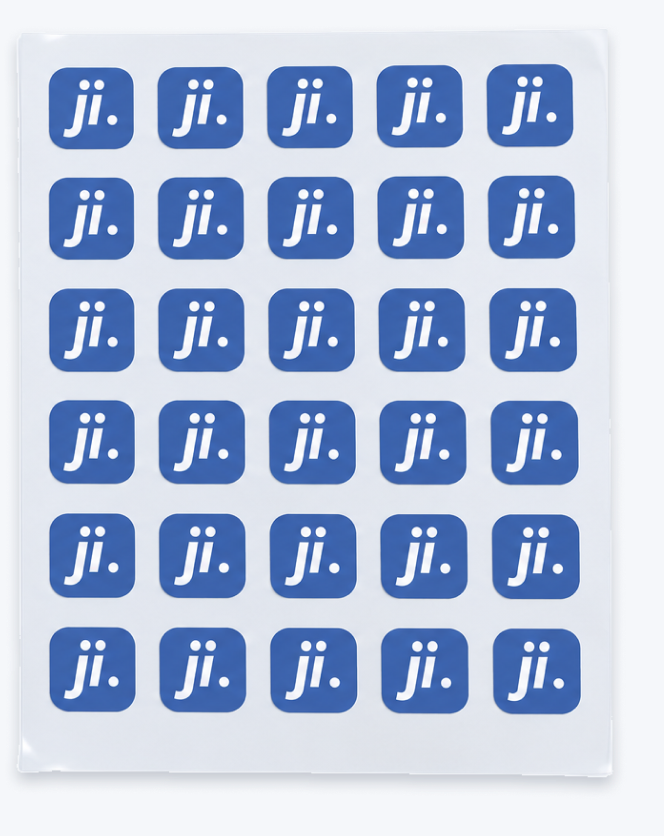
Gang sheetMany designs share one sheet and one print run

Gang sheet vs single transfers

The main difference is what you pay for: the whole sheet, or each design.

TopicGang sheetSingle transfers
What you pay forGang sheetThe sheet size, however many designs it holdsSingle transfersEach design, usually priced by its size
Best forGang sheetMany small designs, or mixed designs and sizes in one orderSingle transfersOne large design or a one-off piece
Layout workGang sheetSomeone arranges the designs, by hand or with a gang sheet builderSingle transfersNone: you send each design on its own
Film useGang sheetTight placement leaves little empty filmSingle transfersEach design uses its own piece of film

Common gang sheet sizes

The width of a gang sheet comes from the printer and its film roll, and the length is up to you.

WidthWhere it is common
13 inches (about 33 cm)Where it is commonDesktop DTF printers that use A3+ film rolls
22 inches (about 56 cm)Where it is commonThe most common width for commercial DTF printing and DTF transfer sellers
24 inches (about 61 cm) and 30 inches (about 76 cm)Where it is commonWider commercial printers; some transfer sellers offer these widths too

Length is flexible. Common lengths are 24, 36, 60 and 120 inches, and many sellers offer longer sheets sold by the foot.

Example: how many designs fit on a 22 × 24 inch sheet

This example uses square designs, a 0.25-inch gap between designs and a 0.5-inch margin at the edges of the sheet.

Design sizeDesigns per rowRowsDesigns per sheet
3 × 3 inchesDesigns per row6Rows7Designs per sheet42
4 × 4 inchesDesigns per row5Rows5Designs per sheet25
10 × 10 inchesDesigns per row2Rows2Designs per sheet4

Real orders mix sizes, so a good layout fills the space between large designs with small ones.

File prep: DPI, transparency and spacing
Good gang sheets start with good files: the right resolution, a transparent background and room around each design.

Resolution: 300 DPI at print size

Most printers ask for 300 DPI at the final print size. DPI depends on size: a 300 DPI image printed at twice its size becomes 150 DPI. Low-res artwork prints soft or pixelated, most visibly on fine lines and text.

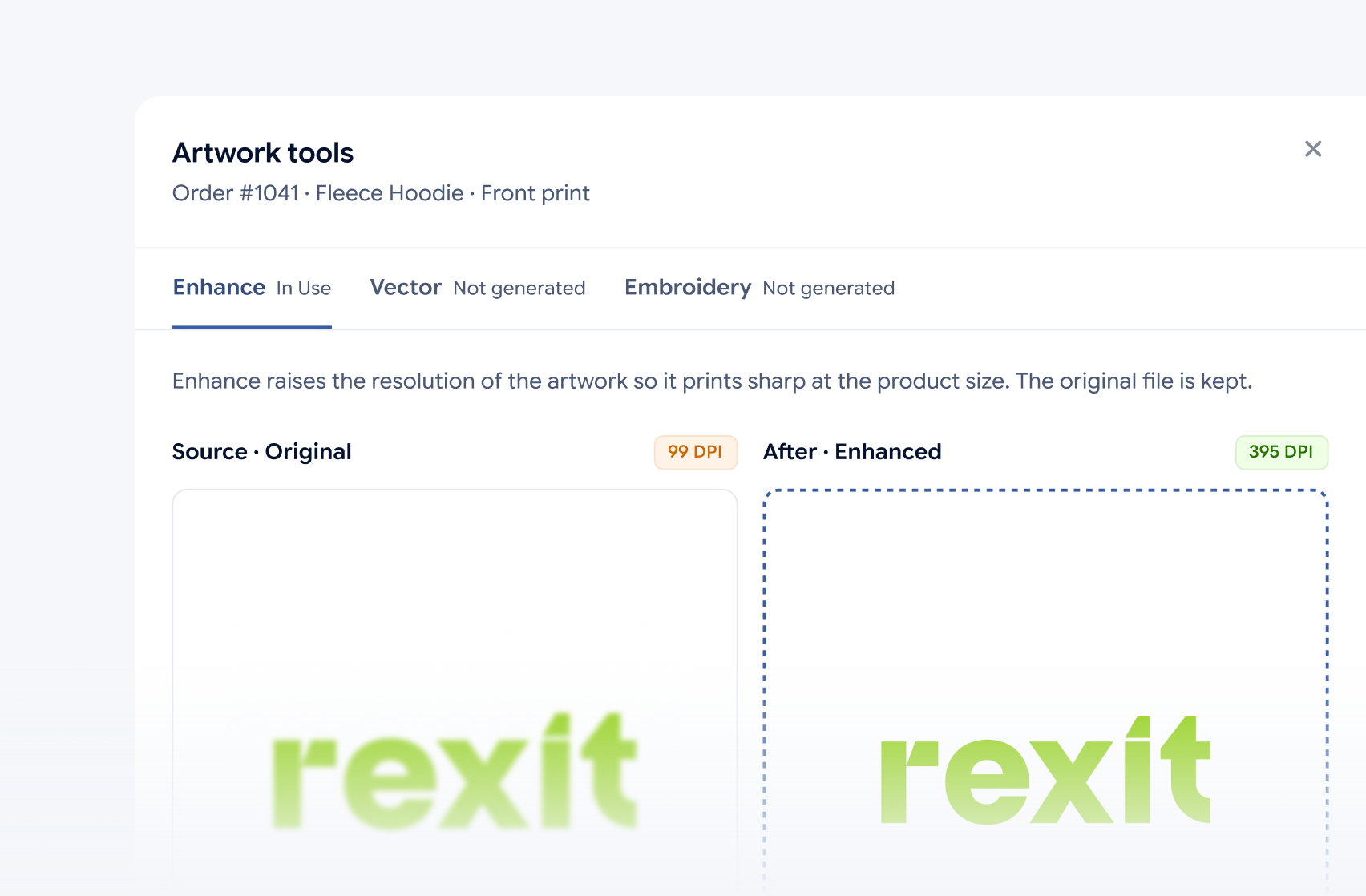
In the Jifup console, every artwork is checked against the quality limit you set. If an image is too low, you can upscale it with AI in one click.

Artwork tools of the Jifup console: the original artwork at 99 DPI beside the enhanced one at 395 DPI

Background: transparent, not white

Save DTF designs as PNG files with a transparent background. A white background is not empty. On DTF it prints as white ink, and you get a white box around your design.

Spacing: leave room to cut

Many sellers ask for at least 0.25 inch (about 6 mm) between designs, and some suggest 0.5 inch for large or complex shapes. The gap is your cutting margin. Keep a small margin at the edges of the sheet too.

DTF, UV DTF and sticker gang sheets

All three put many designs on one sheet, but they differ in material, surface and cutting.

DTF gang sheets

A DTF (direct-to-film) gang sheet is printed on PET film with color and white ink. Adhesive powder is added and cured, and each design is then heat pressed onto fabric such as cotton, polyester or blends. DTF designs are usually trimmed by hand, so a cut line is optional.

DTF and apparel production in Jifup

UV DTF gang sheets

A UV DTF gang sheet is printed with UV-cured ink on an adhesive film and covered with a clear transfer film. You cut around each design, press it onto a hard item such as a cup, a glass or a phone case, and peel off the transfer film. No heat press is needed, and UV DTF is not made for fabric.

Sticker gang sheets

A sticker gang sheet is printed on vinyl or paper sticker media. Each sticker needs a cut line, a path that tells the cutter where to cut. Kiss-cut stickers stay on the backing sheet, and die-cut stickers are cut through the backing too.

Sticker production in Jifup

How to make a gang sheet

You can make a gang sheet by hand in a design editor or with a gang sheet builder.

By hand in a design editor

Create a canvas as wide as your sheet at 300 DPI, place each design at its print size with an even gap, and export a transparent PNG. This works, but it is slow, and a low-res image or a small gap is easy to miss.

With a gang sheet builder

A gang sheet builder places the designs for you with the gap you choose. In Jifup it takes four steps:

  1. Step 1Create a free Jifup account with Google or email. No credit card.
  2. Step 2Upload your designs.
  3. Step 3Set the sheet size and the gap. Jifup places every design on the sheet.
  4. Step 4Download the print-ready sheet and print it.

Common gang sheet mistakes

Most bad prints come from a few file and layout mistakes, and each one is easy to avoid.

  • Low resolutionArtwork under 300 DPI at print size prints blurry, and enlarging a small image makes it worse.
  • A white backgroundUnless you want a white box around the design, use a transparent background.
  • Gaps that are too smallDesigns that almost touch are hard to cut apart, and on DTF the adhesive powder can join them.
  • The wrong sheet widthThe file must match the width of the roll the printer uses.
  • Tiny detailsVery thin lines and very small text may not print or transfer cleanly.
  • Designs at the wrong sizeSet each design to its final print size before you place it, not after.

Questions about gang sheets

A gang sheet is usually as wide as the printer’s film roll: 22 inches is the most common DTF width, and 13 inches is common on desktop printers. Gang sheet lengths often run from 24 to 120 inches.

A gang sheet should be 300 DPI at the final print size. Each design needs that resolution at the size it will print, so check it again after you resize it.

Usually, yes, when you need many small designs. Most sellers price a gang sheet by its size, so the more designs fit, the less each design costs. For one large design, a single transfer is often simpler.

Yes. A gang sheet can hold different designs in different sizes, as long as each one has a gap around it and all use the same print process, such as DTF.

Sticker gang sheets need a cut line around each sticker, so a cutter can cut them out. DTF gang sheets usually do not, because the designs are trimmed by hand before pressing.

A transparent PNG at 300 DPI is the most common format for DTF gang sheets, and some printers also accept PDF. Sticker gang sheets also need cut line data for the cutter.

Build your first gang sheet free.

Jifup places your designs on the sheet with the gap you set. Sign up with Google or email in seconds.

No credit card.